Junior RangersGrades K - 6
SCIENCE IN THE SUBALPINE
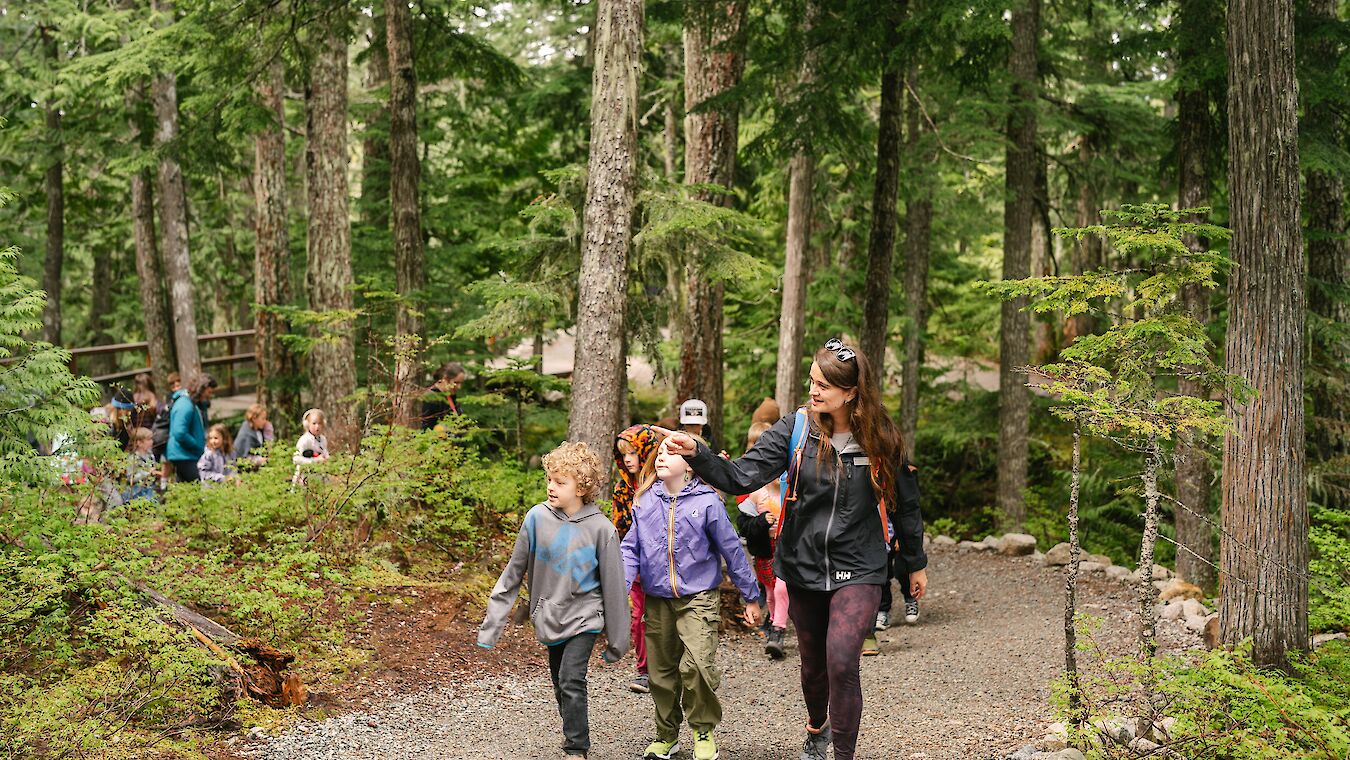
Our Junior Rangers program takes students on a journey to our unique subalpine environment, 885 metres above sea level. Through hands-on, place-based learning, our program aligns with BC curriculum objectives while engaging students in observation, exploration, and inquiry. We connect students with the surrounding environment in meaningful ways that foster curiosity, critical thinking, and a deeper understanding of nature and wildlife.
GRADES K - 3: SEASONS, NEEDS & CONNECTIONS IN THE SUBALPINE
In this course, students explore the unique subalpine ecosystem and how it changes throughout the year. Through guided hikes and hands-on group activities, they learn how plants and animals meet their basic needs and adapt to seasonal conditions. Students are introduced to the connections between living things by investigating simple food chains and food webs, discovering how all life in this environment is linked. Learning is experiential and collaborative, helping students build an early understanding of how living things depend on each other and their surroundings.
GRADES 4 - 6: SENSING, SURVIVING & CHANGING IN THE SUBALPINE
In this course, students explore the subalpine biome and the diverse life it supports. Through hands-on, place-based learning, they investigate how animals use specialized senses to respond to their environment and survive in challenging conditions. Students also discover that plants, although they cannot move, use their own “super senses” to detect light, water, and changes in their surroundings, allowing them to grow, adapt, and thrive in this environment. Together, these observations help students understand how living things are connected and what sustains a healthy ecosystem.
At the same time, students examine the landscape itself, discovering how rocks form, change, and shape the mountain over time. As they hike the trails, they explore the rock cycle in action—learning how forces like heat, pressure, weathering, and erosion build up the landscape and break it down.
By connecting living systems with geological processes, students develop a deeper understanding of how both life and land are constantly changing, and how these systems are interconnected.
"Couldn't ask for a better program. Students really enjoyed the interactive stations with the physical games set up throughout the hiking trail." - Guru Angad Dev School, Grade 4 Class